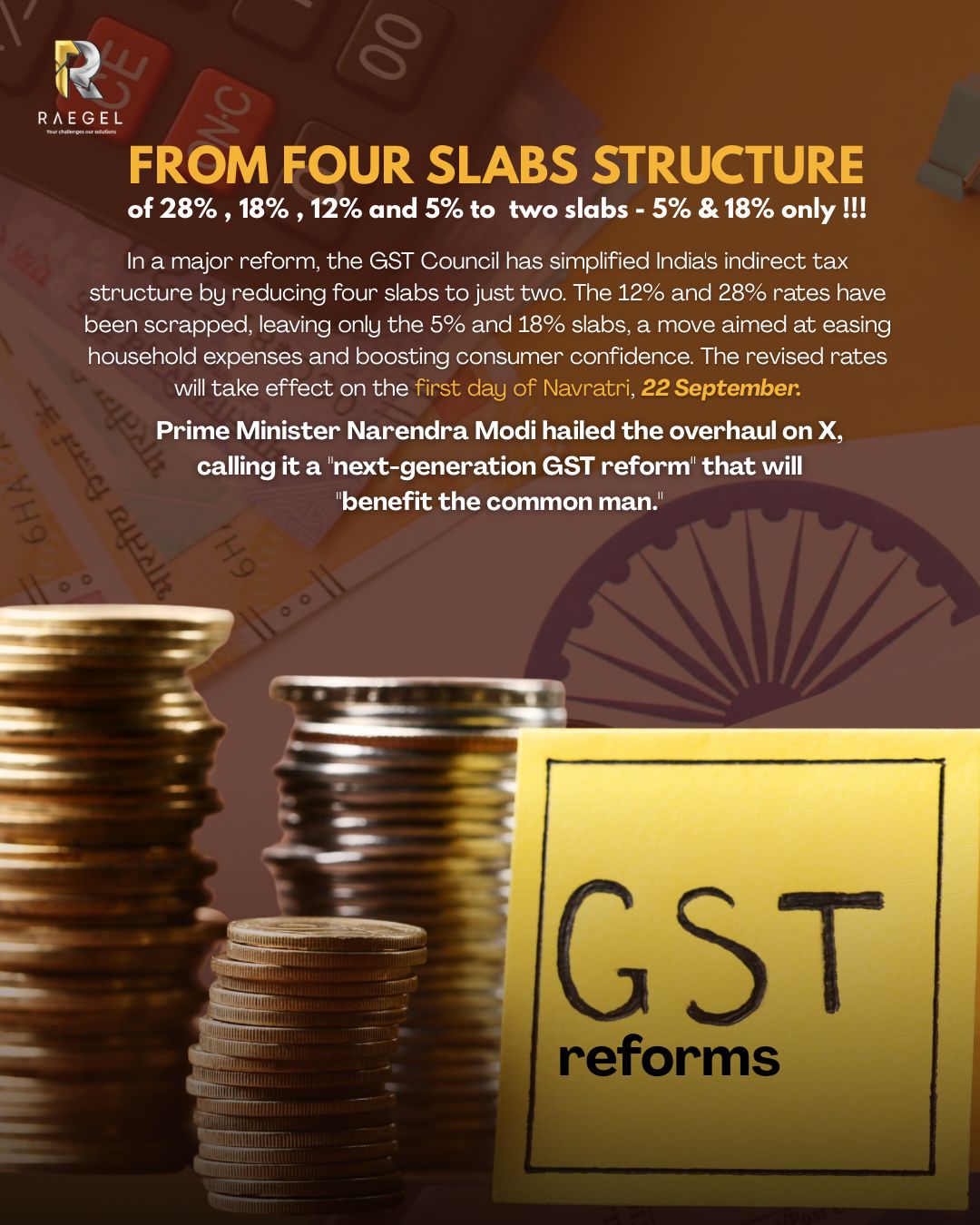

Following its most significant overhaul since its 2017 launch, India’s Goods and Services Tax (GST) has been streamlined into a new “GST 2.0” framework. Announced by the GST Council on September 3, 2025, and effective from September 22, 2025, these reforms aim to simplify the tax structure, reduce the burden on consumers, and boost the economy.
Key Reforms Under GST 2.0
The centerpiece of GST 2.0 is the rationalization of the tax slabs. The previous four-tier structure of 5%, 12%, 18%, and 28% has been consolidated into a two-slab system.
The new GST structure includes:
- A 5% merit rate for essential goods and services.
- A 18% standard rate for most other items.
- A 40% demerit/sin rate for luxury items and goods such as high-end cars, tobacco, and aerated drinks.
This simplification is intended to make the tax system more transparent and easier for both businesses and consumers to understand.
Benefits and Implications for Consumers
- Essential Goods: Many essential items have seen a tax reduction. For instance, GST on items like UHT milk and paneer is now nil. The Finance Ministry is actively monitoring prices of common use items to ensure the benefits of rate cuts are passed on to consumers.
- Consumer Durables: Major appliances such as televisions, air conditioners, refrigerators, and washing machines have moved from the 28% slab to the 18% slab, making them more affordable.
- Automobiles: Small cars now fall under the 18% slab instead of 28%, leading to significant price reductions across various models. This could result in cost reductions of 12–15% for automobiles.
Broader Economic Impact
Beyond direct consumer benefits, GST 2.0 is designed to stimulate the broader economy. For businesses, especially Micro, Small, and Medium Enterprises (MSMEs), the simplified structure reduces compliance costs and procedural complexities. Faster, automated refunds will improve working capital for manufacturers and exporters. By lowering prices, the government anticipates a rise in consumer demand, which in turn is expected to boost manufacturing, widen the tax base through better compliance, and create a cycle of sustainable economic growth. While there are concerns from some states about potential revenue shortfalls, the central government views the changes as a “fiscal implication” that will be offset by increased economic activity.